• Home
Results for {phrase} ({results_count} of {results_count_total})
Displaying {results_count} results of {results_count_total}

More results...

Filter by Product categories
Bioactive Molecules
Amino Acids, Peptides, Proteins
Carbohydrates
Lipids, Fatty Acids
Metabolites
Phytochemicals
Vitamins
Bioactive Small Molecules
Biopolymers
Detection in Bioanalysis
Fluorescent Detection
Organic Pollutants & Pesticides
Fungicides
Herbicides
Insecticides
Other Pollutants
Pharmaceutically Actives
Antibiotics
API's & Intermediates
Steroids
Reagents and Building Blocks
Reagents for Life Sciences
Buffers
Building Blocks, Intermediates, Reagents
Fluorescent Detection
Linker
Non Fluorescent Detection & Chromogene Detection
Quorum Sensing
Uncategorized
Unkategorisiert
    Industriestrasse 15, CH-9015 St. Gallen, Tel: +41 71 244 48 25
    • 0Shopping Cart
    Chemodex
    • Home
    • Products
    • Catalogs
    • About Chemodex
    • Contact & Distributors
    • Menu Menu
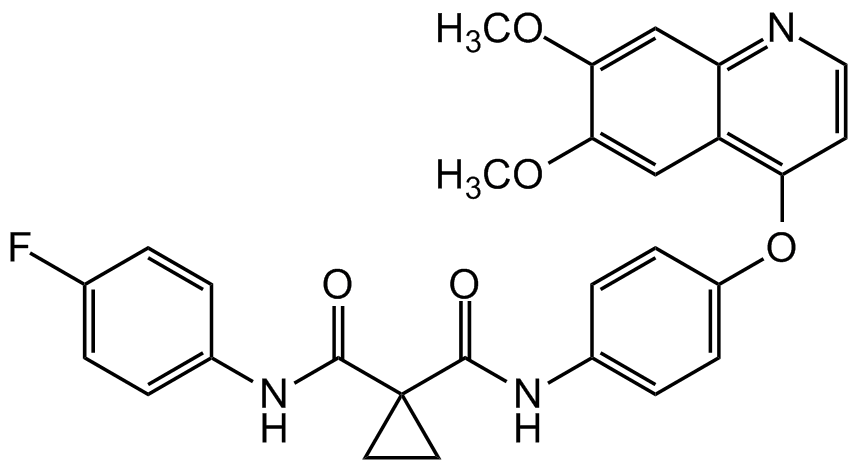
    Cabozantinib

    Available from stock

      Inquiry

      Please fill out the form for your inquiry:


      * required field

      Cabozantinib

      SKU
      C0755

      Category: Building Blocks, Intermediates, Reagents

      Synonyms
      BMS-907351 , XL184
      849217-68-1
      CAS-Number
      C28H24FN3O5
      Molecular Formula
      501.5
      Molecular Weight

      For Research Use Only. Not Intended for Diagnostic or Therapeutic Use.

      • Product Data
      • Handling
      • Safety Information
      • Details

      Specifications

      Purity
      ≥98% (HPLC)
      Appearance
      White to off-white solid
      Identity
      1H-NMR

      Properties

      Solvents
      DMSO (20 mg/ml). Slightly ethanol.

      Documentation

      Safety Data Sheet (SDS)
      CDX C0755 MSDS.pdf
      Shipping
      AMBIENT
      Short Term Storage
      +4°C
      Long Term Storage
      -20°C
      Handling Advice
      Protect from light and moisture.
      Use / Stability
      Stable for at least 2 years after receipt when stored at -20°C.
      Transportation
      Not dangerous goods
      Description
      Cabozantinib is a potent multi-targeted receptor tyrosine kinase (RTK) inhibitor of endothelial growth factor receptor 2 (VEGFR2) (IC50=0.035nM), the hepatocyte growth factor receptor c-Met (IC50=1.3nM), AXL (IC50=7nM), fms like tyrosine kinase 3 (FLT3) (IC50=11.3nM), mast/stem cell growth factor (KIT) (IC50=4.6nM), RET (IC50=5.2nM), tyrosine-protein kinase receptor (TIE-2) (IC50=14.3nM) and RON (IC50=124nM). Cabozantinib reduces cell proliferation and vascular density. It also induces apoptosis and intratumoral hypoxia. Cabozantinib exhibits dose-related tumor growth inhibition, tumor regression, angiogenesis and/or metastasis inhibition in a broad range of preclinical tumor models. The anticancer compound cabozantinib has undergone clinical trial in a broad number of cancers, including thyroid carcinoma, prostate cancer, ovarian cancer, melanoma, breast cancer, non-small cell lung cancer, hepatocellular cancer, renal cell carcinoma and glioblastoma.
      Smiles
      O=C(NC1=CC=C(OC2=C3C=C(C(OC)=CC3=NC=C2)OC)C=C1)C4(C(NC5=CC=C(C=C5)F)=O)CC4
      InChi Key
      ONIQOQHATWINJY-UHFFFAOYSA-N
      References
      (1) Y. Zhang, et al., IDrugs 13, 112 (2010) , (2) R. Kurzrock, et al., J. Clin. Oncol. 29, 2660 (2011) , (3) F.M. Yakes, et al., Mol. Canc. Ther. 10, 2298 (2011) , (4) S. Roy, et al., Anticancer Agents Med. Chem. 15, 37 (2015) (Review) , (5) N.M. Tannir, et al., Curr. Oncol. Rep. 19, 14 (2017) (Review) , (6) C. Grullich, Recent Res. Cancer Res. 211, 67 (2018) (Review) , (7) J.N. Markowitz & K.M. Fancher,, Pharmacotherapy 38, 357 (2018) (Review) , (8) A. Desai & E.J. Small, Future Oncol. 15, 2337 (2019) (Review) , (9) J. Trojan, Drugs 80, 1203 (2020) (Review)
      InChi
      InChI=1S/C28H24FN3O5/c1-35-24-15-21-22(16-25(24)36-2)30-14-11-23(21)37-20-9-7-19(8-10-20)32-27(34)28(12-13-28)26(33)31-18-5-3-17(29)4-6-18/h3-11,14-16H,12-13H2,1-2H3,(H,31,33)(H,32,34)

      Cabozantinib is a potent multi-targeted receptor tyrosine kinase (RTK) inhibitor of endothelial growth factor receptor 2 (VEGFR2) (IC50=0.035nM), the hepatocyte growth factor receptor c-Met (IC50=1.3nM), AXL (IC50=7nM), fms like tyrosine kinase 3 (FLT3) (IC50=11.3nM), mast/stem cell growth factor (KIT) (IC50=4.6nM), RET (IC50=5.2nM), tyrosine-protein kinase receptor (TIE-2) (IC50=14.3nM) and RON (IC50=124nM). Cabozantinib reduces cell proliferation and vascular density. It also induces apoptosis and intratumoral hypoxia. Cabozantinib exhibits dose-related tumor growth inhibition, tumor regression, angiogenesis and/or metastasis inhibition in a broad range of preclinical tumor models. The anticancer compound cabozantinib has undergone clinical trial in a broad number of cancers, including thyroid carcinoma, prostate cancer, ovarian cancer, melanoma, breast cancer, non-small cell lung cancer, hepatocellular cancer, renal cell carcinoma and glioblastoma.

      SKU: C0755 Category: Building Blocks, Intermediates, Reagents
      • Additional information

      Additional information

      Synonyms

      BMS-907351, XL184

      Purity

      ≥98% (HPLC)

      Appearance

      White to off-white solid

      CAS-Number

      849217-68-1

      Molecular Formula

      C28H24FN3O5

      Molecular Weight

      501.5

      Identity

      1H-NMR

      Solvents

      DMSO (20 mg/ml). Slightly ethanol.

      Smiles

      O=C(NC1=CC=C(OC2=C3C=C(C(OC)=CC3=NC=C2)OC)C=C1)C4(C(NC5=CC=C(C=C5)F)=O)CC4

      InChi Key

      ONIQOQHATWINJY-UHFFFAOYSA-N

      Shipping

      AMBIENT

      Short Term Storage

      +4°C

      Long Term Storage

      -20°C

      Handling Advice

      Protect from light and moisture.

      Use / Stability

      Stable for at least 2 years after receipt when stored at -20°C.

      Transportation

      Not dangerous goods

      References

      (1) Y. Zhang, et al., IDrugs 13, 112 (2010), (2) R. Kurzrock, et al., J. Clin. Oncol. 29, 2660 (2011), (3) F.M. Yakes, et al., Mol. Canc. Ther. 10, 2298 (2011), (4) S. Roy, et al., Anticancer Agents Med. Chem. 15, 37 (2015) (Review), (5) N.M. Tannir, et al., Curr. Oncol. Rep. 19, 14 (2017) (Review), (6) C. Grullich, Recent Res. Cancer Res. 211, 67 (2018) (Review), (7) J.N. Markowitz & K.M. Fancher,, Pharmacotherapy 38, 357 (2018) (Review), (8) A. Desai & E.J. Small, Future Oncol. 15, 2337 (2019) (Review), (9) J. Trojan, Drugs 80, 1203 (2020) (Review)

      InChi

      InChI=1S/C28H24FN3O5/c1-35-24-15-21-22(16-25(24)36-2)30-14-11-23(21)37-20-9-7-19(8-10-20)32-27(34)28(12-13-28)26(33)31-18-5-3-17(29)4-6-18/h3-11,14-16H,12-13H2,1-2H3,(H,31,33)(H,32,34)

      Quantity

      10 mg, 50 mg, Bulk

      Related products

      • 2

        2,4-Difluororesorcinol

        Purity: ≥98% (HPLC)CAS-Number: 195136-71-1SKU: D0329

        Read more Show Details
      • 1

        1,3-Dihydro-1-hydroxy-3,3-dimethyl-1,2-benziodoxole

        Purity: ≥99% (HPLC)CAS-Number: 69429-70-5SKU: D0255

        Read more Show Details
      • Difluoromethyl phenyl sulfone

        Difluoromethyl phenyl sulfone

        Purity: ≥98% (HPLC)CAS-Number: 1535-65-5SKU: D0401

        Read more Show Details
      • 3

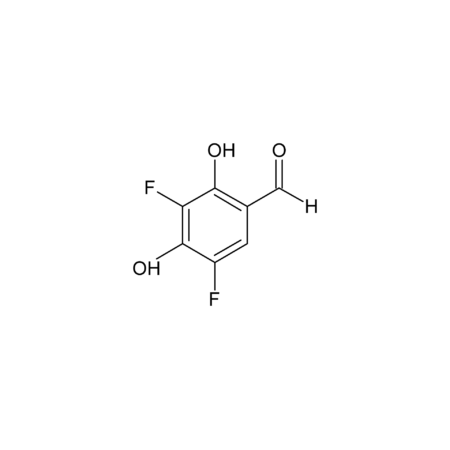
        3,5-Difluoro-2,4-dihydroxybenzaldehyde

        Purity: ≥98% (GC)CAS-Number: 209541-27-5SKU: D0330

        Read more Show Details
      © Copyright - Chemodex AG - Customized Molecules developed in Switzerland
      • Home
      • All products
      • Order and delivery information
      • Disclaimer
      • Privacy policy
      • About this site
      Eicosapentaenoic acidEicosapentaenoic acid2-Chloro-4-methoxyresorcinol2-Chloro-4-methoxyresorcinol Scroll to top