• Home
Results for {phrase} ({results_count} of {results_count_total})
Displaying {results_count} results of {results_count_total}

More results...

Filter by Product categories
Bioactive Molecules
Amino Acids, Peptides, Proteins
Carbohydrates
Lipids, Fatty Acids
Metabolites
Phytochemicals
Vitamins
Bioactive Small Molecules
Biopolymers
Detection in Bioanalysis
Fluorescent Detection
Organic Pollutants & Pesticides
Fungicides
Herbicides
Insecticides
Other Pollutants
Pharmaceutically Actives
Antibiotics
API's & Intermediates
Steroids
Reagents and Building Blocks
Reagents for Life Sciences
Buffers
Building Blocks, Intermediates, Reagents
Fluorescent Detection
Linker
Non Fluorescent Detection & Chromogene Detection
Quorum Sensing
Uncategorized
    Industriestrasse 15, CH-9015 St. Gallen, Tel: +41 71 244 48 25
    • 0Shopping Cart
    Chemodex
    • Home
    • Products
    • Catalogs
    • About Chemodex
    • Contact & Distributors
    • Menu Menu
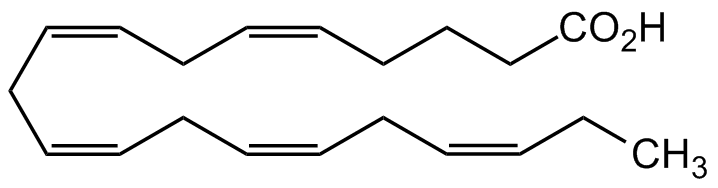
    Eicosapentaenoic acid

    Available from stock

      Inquiry

      Please fill out the form for your inquiry:


      * required field

      Eicosapentaenoic acid

      SKU
      C0465

      Category: Lipids, Fatty Acids

      Synonyms
      EPA , cis-5,8,11,14,17-Eicosapentaenoic acid , Timnodonic acid
      10417-94-4
      CAS-Number
      C20H30O2
      Molecular Formula
      302.45
      Molecular Weight

      For Research Use Only. Not Intended for Diagnostic or Therapeutic Use.

      • Product Data
      • Handling
      • Safety Information
      • Details

      Specifications

      Purity
      ≥97% (NMR)
      Appearance
      Colourless to light yellow liquid
      Identity
      1H-NMR

      Properties

      Solvents
      methanol (50 mg/ml).
      Melting Point
      -54-53 °C (lit.)
      Refractive Index
      n20/D 1.4977 (lit.)
      Density
      0.943 g/ml at 25 °C (lit.)
      Shipping
      AMBIENT
      Short Term Storage
      +4°C
      Long Term Storage
      -20°C
      Handling Advice
      Protect from light and moisture.
      Use / Stability
      Stable for at least 2 years after receipt when stored at -20°C.
      Transportation
      Not dangerous goods
      Description
      Eicosapentaenoic acid (EPA) is one of several omega-3 fatty acids abundantly available in marine organisms. EPA has antioxidant, anti-inflammatory, cardiovascular, anticancer and antiobesity activities. EPA is a polyunsaturated fatty acid (PUFA) that acts as a precursor. When omega-3 fatty acids, like EAP is incorporated into the cell membrane, it induces production of eicosanoids and resolvins which then compete with arachidonic acid for the activity of phospholipase A2. Fatty acids are then liberated inside the cytosol and via cyclooxygenase-2 (COX-2), 5-lipoxygenase and thromboxane synthetase activity get degraded into prostaglandins, leukotrienes, and thromboxanes, responsible for decreasing the synthesis of eicosanoids derived from arachidonic acid (AA), like PGI2, PGF2α, PGE2, and LTB4 (pro-inflammatory) and increase the synthesis of LT5, thromboxane-3 and PGE3 (weak effects on inflammation). It has been shown that omega-3 fatty acids potentially exert their anti-inflammatory effect via toll-like receptor 4 (TLR4) pathway and G-protein coupled receptor 120 (GPR120) pathway to inhibit the NF-κB and consequently the inflammatory cascade. EPA plays a role in mediating inflammatory processes and immunomodulation for both innate and acquired immune systems and might be interesting vor cytokine storm prevention. EPA has been shown to stimulate ERK1/2 and C/EBPβ phosphorylation, and induces demethylation of CpG island B in U937 leukemia cells. Attenuates proliferation of U9137 cells, and induces cell cycle arrest and apoptosis in pancreatic cells in vitro. EPA binds and activates PPARα and enhances insulin sensitivity. It also has shown positive impacts on gut microbiota flora, leading to its antiobesity and anti-inflammatory activities. EPA has been shown to offer protection against coronary heart disease, thrombosis, ischemic brain injury, scaly dermatitis and some inflammatory diseases.
      Smiles
      CC/C=CC/C=CC/C=CC/C=CC/C=CCCCC(O)=O
      InChi Key
      JAZBEHYOTPTENJ-JLNKQSITSA-N
      References
      (1) N.R. Yerram, et al., J. Lipid Res. 30, 1747 (1989) , (2) P.B. Lai, et al., Br. J. Cancer 74, 1375 (1996) , (3) S. Iwamoto, et al., Nutr. Cancer 31, 143 (1998) , (4) M. Wada, et al., J. Biol. Chem. 282, 22254 (2007) , (5) J.J. Li, et al., Mol. Nutr. Food Res. 52, 631 (2008) (Review) , (6) V. Ceccarelli, et al., PLoS One 9, e85025 (2014) , (7) G. Pappalardo, et al., Nutrition 31, 549 (2015) (Review) , (8) S. D'Angelo, et al., Nutrients. 12, 2751 (2020) , (9) F. Oppedisano, et al., Biomedicines 8, 306 (2020) (Review) , (10) M. Jalili & A. Hekmatdoost, Nutrition 85, 111070 (2020) (Review) , (11) D. Hathaway, et al., Infect. Chemother. 52, 478 (2020) (Review) , (12) Y. Fu, et al., Mediators Inflamm. 2021, 8879227 (2021) (Review) , (13) A. Elagizi, et al., Nutrients 13, 204 (2021) (Review)
      InChi
      InChI=1S/C20H30O2/c1-2-3-4-5-6-7-8-9-10-11-12-13-14-15-16-17-18-19-20(21)22/h3-4,6-7,9-10,12-13,15-16H,2,5,8,11,14,17-19H2,1H3,(H,21,22)/b4-3-,7-6-,10-9-,13-12-,16-15-

      Eicosapentaenoic acid (EPA) is one of several omega-3 fatty acids abundantly available in marine organisms. EPA has antioxidant, anti-inflammatory, cardiovascular, anticancer and antiobesity activities. EPA is a polyunsaturated fatty acid (PUFA) that acts as a precursor. When omega-3 fatty acids, like EAP is incorporated into the cell membrane, it induces production of eicosanoids and resolvins which then compete with arachidonic acid for the activity of phospholipase A2. Fatty acids are then liberated inside the cytosol and via cyclooxygenase-2 (COX-2), 5-lipoxygenase and thromboxane synthetase activity get degraded into prostaglandins, leukotrienes, and thromboxanes, responsible for decreasing the synthesis of eicosanoids derived from arachidonic acid (AA), like PGI2, PGF2α, PGE2, and LTB4 (pro-inflammatory) and increase the synthesis of LT5, thromboxane-3 and PGE3 (weak effects on inflammation). It has been shown that omega-3 fatty acids potentially exert their anti-inflammatory effect via toll-like receptor 4 (TLR4) pathway and G-protein coupled receptor 120 (GPR120) pathway to inhibit the NF-κB and consequently the inflammatory cascade. EPA plays a role in mediating inflammatory processes and immunomodulation for both innate and acquired immune systems and might be interesting vor cytokine storm prevention. EPA has been shown to stimulate ERK1/2 and C/EBPβ phosphorylation, and induces demethylation of CpG island B in U937 leukemia cells. Attenuates proliferation of U9137 cells, and induces cell cycle arrest and apoptosis in pancreatic cells in vitro. EPA binds and activates PPARα and enhances insulin sensitivity. It also has shown positive impacts on gut microbiota flora, leading to its antiobesity and anti-inflammatory activities. EPA has been shown to offer protection against coronary heart disease, thrombosis, ischemic brain injury, scaly dermatitis and some inflammatory diseases.

      SKU: C0465 Category: Lipids, Fatty Acids
      • Additional information

      Additional information

      Synonyms

      EPA, cis-5,8,11,14,17-Eicosapentaenoic acid, Timnodonic acid

      Purity

      ≥97% (NMR)

      Appearance

      Colourless to light yellow liquid

      CAS-Number

      10417-94-4

      Molecular Formula

      C20H30O2

      Molecular Weight

      302.45

      Identity

      1H-NMR

      Solvents

      methanol (50 mg/ml).

      Melting Point

      -54-53 °C (lit.)

      Refractive Index

      n20/D 1.4977 (lit.)

      Density

      0.943 g/ml at 25 °C (lit.)

      Smiles

      CC/C=CC/C=CC/C=CC/C=CC/C=CCCCC(O)=O

      InChi Key

      JAZBEHYOTPTENJ-JLNKQSITSA-N

      Shipping

      AMBIENT

      Short Term Storage

      +4°C

      Long Term Storage

      -20°C

      Handling Advice

      Protect from light and moisture.

      Use / Stability

      Stable for at least 2 years after receipt when stored at -20°C.

      Transportation

      Not dangerous goods

      References

      (1) N.R. Yerram, et al., J. Lipid Res. 30, 1747 (1989), (2) P.B. Lai, et al., Br. J. Cancer 74, 1375 (1996), (3) S. Iwamoto, et al., Nutr. Cancer 31, 143 (1998), (4) M. Wada, et al., J. Biol. Chem. 282, 22254 (2007), (5) J.J. Li, et al., Mol. Nutr. Food Res. 52, 631 (2008) (Review), (6) V. Ceccarelli, et al., PLoS One 9, e85025 (2014), (7) G. Pappalardo, et al., Nutrition 31, 549 (2015) (Review), (8) S. D'Angelo, et al., Nutrients. 12, 2751 (2020), (9) F. Oppedisano, et al., Biomedicines 8, 306 (2020) (Review), (10) M. Jalili & A. Hekmatdoost, Nutrition 85, 111070 (2020) (Review), (11) D. Hathaway, et al., Infect. Chemother. 52, 478 (2020) (Review), (12) Y. Fu, et al., Mediators Inflamm. 2021, 8879227 (2021) (Review), (13) A. Elagizi, et al., Nutrients 13, 204 (2021) (Review)

      InChi

      InChI=1S/C20H30O2/c1-2-3-4-5-6-7-8-9-10-11-12-13-14-15-16-17-18-19-20(21)22/h3-4,6-7,9-10,12-13,15-16H,2,5,8,11,14,17-19H2,1H3,(H,21,22)/b4-3-,7-6-,10-9-,13-12-,16-15-

      Quantity

      100 mg, 500 mg, Bulk

      Related products

      • Hyodeoxycholic acid

        Hyodeoxycholic acid

        Purity: ≥98% (HPLC)CAS-Number: 83-49-8SKU: H0198

        Read more Show Details
      • Methyl behenate

        Methyl behenate

        Purity: ≥95% (GC)CAS-Number: 929-77-1SKU: M0330

        Read more Show Details
      • Ursodeoxycholic acid

        Ursodeoxycholic acid

        Purity: ≥99% (T)CAS-Number: 128-13-2SKU: U0019

        Read more Show Details
      • Lycopene

        Lycopene

        Purity: ≥98% (HPLC)CAS-Number: 502-65-8SKU: L0091

        Read more Show Details
      © Copyright - Chemodex AG - Customized Molecules developed in Switzerland
      • Home
      • All products
      • Order and delivery information
      • Disclaimer
      • Privacy policy
      • About this site
      (-)-Catechin(-)-CatechinEthyl azidoacetateEthyl azidoacetate Scroll to top