• Home
Results for {phrase} ({results_count} of {results_count_total})
Displaying {results_count} results of {results_count_total}

More results...

Filter by Product categories
Bioactive Molecules
Amino Acids, Peptides, Proteins
Carbohydrates
Lipids, Fatty Acids
Metabolites
Phytochemicals
Vitamins
Bioactive Small Molecules
Biopolymers
Detection in Bioanalysis
Fluorescent Detection
Organic Pollutants & Pesticides
Fungicides
Herbicides
Insecticides
Other Pollutants
Pharmaceutically Actives
Antibiotics
API's & Intermediates
Steroids
Reagents and Building Blocks
Reagents for Life Sciences
Buffers
Building Blocks, Intermediates, Reagents
Fluorescent Detection
Linker
Non Fluorescent Detection & Chromogene Detection
Quorum Sensing
Uncategorized
Unkategorisiert
    Industriestrasse 15, CH-9015 St. Gallen, Tel: +41 71 244 48 25
    • 0Shopping Cart
    Chemodex
    • Home
    • Products
    • Catalogs
    • About Chemodex
    • Contact & Distributors
    • Menu Menu
    Silibinin

    Available from stock

      Inquiry

      Please fill out the form for your inquiry:


      * required field

      Silibinin

      SKU
      S0276

      Category: Phytochemicals

      Synonyms
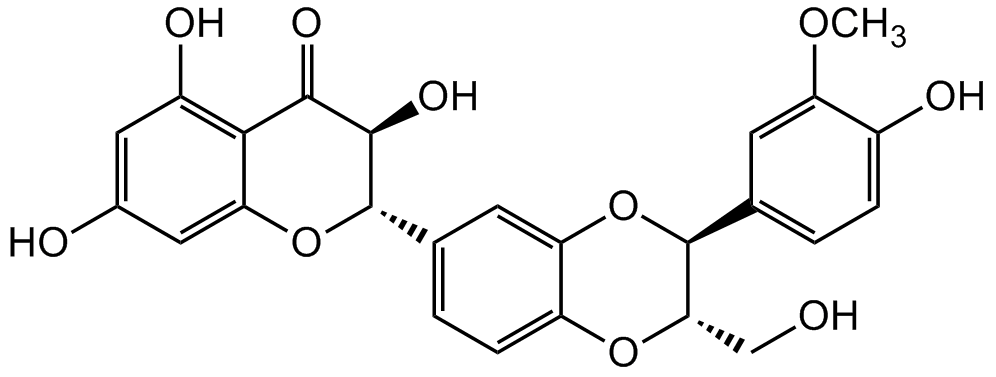
      2,3-Dihydro-3-(4-hydroxy-3-methoxyphenyl)-2-(hydroxymethyl)-6-(3,5,7-trihydroxy-4-oxobenzopyran-2-yl)benzodioxin , Silybin , NSC 651520 , Flavobin , Silymarin I
      22888-70-6
      CAS-Number
      C25H22O10
      Molecular Formula
      482.44
      Molecular Weight

      For Research Use Only. Not Intended for Diagnostic or Therapeutic Use.

      • Product Data
      • Handling
      • Safety Information
      • Details

      Specifications

      Purity
      ≥98% (HPLC)
      Appearance
      White to slightly yellow powder
      Identity
      1H-NMR

      Properties

      Solvents
      DMSO (10 mg/ml), DMF (20 mg/ml)
      Melting Point
      167° C

      Documentation

      Safety Data Sheet (SDS)
      CDX S0276 SDS.pdf
      Shipping
      AMBIENT
      Short Term Storage
      -20°C
      Long Term Storage
      -20°C
      Handling Advice
      Protect from light and moisture.
      Use / Stability
      Stable for at least 2 years after receipt when stored at -20°C.
      Hazard statements
      H302, H410
      Precautionary statements
      P264, P270, P273, P301 + P312, P330, P391, P501
      GHS Symbol
      GHS07+GHS09
      Signal word
      Warning
      Transportation
      Not dangerous goods
      Description
      Silibinin is a naturally occurring flavanone from Silybum marianum (milk thistle plant) and the main component (active principle) of the Silymarin extract. Silibinin has shown pleiotropic biological properties, including potent antioxidant, anti-inflammatory, anticancer, antidiabetic, hepatoprotective, neuroprotective, antiviral, antimicrobial and immunosuppressive activities. Silibinin demonstrates promising anticancer effects in vitro and in vivo. The molecular mechanisms of silibinin-mediated antiproliferative effects are mainly via receptor tyrosine kinases, androgen receptor, STATs, NF-&kappa,B, cell cycle arrest and apoptotis/autophagy inducing signaling pathways in various cancer cells. Silibinin was reported to improve glycemic homeostasis by improving the activity of pancreatic β,-cells, increasing insulin sensitivity of liver and muscle cells and decreasing lipid deposition in adipocytes. Next to modulating the NF&kappa, signaling pathway, Sibilin also inhibits NLRP1/NLRP3 inflammasomes signaling pathways. It modulates many molecular changes caused by xenobiotics and ultraviolet radiation to protect the skin and is used in cosmeceutical preparations.
      Smiles
      OC1=C2C(O[C@@H](C3=CC=C(O[C@@H](CO)[C@H](C4=CC=C(O)C(OC)=C4)O5)C5=C3)[C@H](O)C2=O)=CC(O)=C1
      InChi Key
      SEBFKMXJBCUCAI-PQVVKJAFSA-N
      References
      (1) C. Dehmlow, et al., Life Sci. 58, 1591 (1996) , (2) C. Dehmlow, et al., Hepatology 23, 749 (1996) , (3) J.A. Hannay & D. Yu, Cancer Biol. Ther. 2, 532 (2003) , (4) R.P. Singh & R. Agarwal, Mutat. Res. 555, 21 (2004) (Review) , (5) R.P. Singh, et al., Oncogene 24, 1188 (2005) , (6) K. Min, et al., Arch. Pharm. Res. 30, 1265 (2007) , (7) R.P. Singh & R. Agarwal, Clin. Dermatol. 27, 479 (2009) (Review) , (8) L. Li, et al., Expert Opin. Investig. Drugs 19, 243 (2010) (Review) , (9) F. Yin, et al., Neurochem. Int. 58, 399 (2011) , (10) G. Marrazzo, et al., Neurosci. Lett. 504, 252 (2011) , (11) C.O. Souza, et al., Life Sci. 91, 159 (2012) , (12) J. McClure, et al., PLoS One 7, e41832 (2012) , (13) D.R. de Oliveira, et al., Biomed. Res. Int. 2015, 292797 (2015) , (14) N. Polachi, et al., Eur. J. Med. Chem. 123, 577 (2016) (Review) , (15) J. Bosch-Barrera, et al., Cancer Treat Rev. 58, 61 (2017) (Review) , (16) L. Tian, et al., Microb. Pathog. 108, 104 (2017) , (17) R. Faridnia, et al., Ann. Parasitol. 64, 29 (2018) , (18) C. Chu, et al., Arch. Pharm. Res. 41, 785 (2018) (Review) , (19) Z. Jahanafrooz, et al., Life Sci. 213, 236 (2018) (Review) , (20) M.L. Matias, et al., Molecules 24, E1548 (2019)
      InChi
      InChI=1S/C25H22O10/c1-32-17-6-11(2-4-14(17)28)24-20(10-26)33-16-5-3-12(7-18(16)34-24)25-23(31)22(30)21-15(29)8-13(27)9-19(21)35-25/h2-9,20,23-29,31H,10H2,1H3/t20-,23+,24-,25-/m0/s1

      Silibinin is a naturally occurring flavanone from Silybum marianum (milk thistle plant) and the main component (active principle) of the Silymarin extract. Silibinin has shown pleiotropic biological properties, including potent antioxidant, anti-inflammatory, anticancer, antidiabetic, hepatoprotective, neuroprotective, antiviral, antimicrobial and immunosuppressive activities. Silibinin demonstrates promising anticancer effects in vitro and in vivo. The molecular mechanisms of silibinin-mediated antiproliferative effects are mainly via receptor tyrosine kinases, androgen receptor, STATs, NF-&kappa,B, cell cycle arrest and apoptotis/autophagy inducing signaling pathways in various cancer cells. Silibinin was reported to improve glycemic homeostasis by improving the activity of pancreatic β,-cells, increasing insulin sensitivity of liver and muscle cells and decreasing lipid deposition in adipocytes. Next to modulating the NF&kappa, signaling pathway, Sibilin also inhibits NLRP1/NLRP3 inflammasomes signaling pathways. It modulates many molecular changes caused by xenobiotics and ultraviolet radiation to protect the skin and is used in cosmeceutical preparations.

      SKU: S0276 Category: Phytochemicals
      • Additional information

      Additional information

      Synonyms

      2,3-Dihydro-3-(4-hydroxy-3-methoxyphenyl)-2-(hydroxymethyl)-6-(3,5,7-trihydroxy-4-oxobenzopyran-2-yl)benzodioxin, Silybin, NSC 651520, Flavobin, Silymarin I

      Purity

      ≥98% (HPLC)

      Appearance

      White to slightly yellow powder

      CAS-Number

      22888-70-6

      Molecular Formula

      C25H22O10

      Molecular Weight

      482.44

      Identity

      1H-NMR

      Solvents

      DMSO (10 mg/ml), DMF (20 mg/ml)

      Melting Point

      167° C

      Smiles

      OC1=C2C(O[C@@H](C3=CC=C(O[C@@H](CO)[C@H](C4=CC=C(O)C(OC)=C4)O5)C5=C3)[C@H](O)C2=O)=CC(O)=C1

      InChi Key

      SEBFKMXJBCUCAI-PQVVKJAFSA-N

      Shipping

      AMBIENT

      Short Term Storage

      -20°C

      Long Term Storage

      -20°C

      Handling Advice

      Protect from light and moisture.

      Use / Stability

      Stable for at least 2 years after receipt when stored at -20°C.

      Hazard statements

      H302, H410

      Precautionary statements

      P264, P270, P273, P301 + P312, P330, P391, P501

      GHS Symbol

      GHS07+GHS09

      Signal word

      Warning

      Transportation

      Not dangerous goods

      References

      (1) C. Dehmlow, et al., Life Sci. 58, 1591 (1996), (2) C. Dehmlow, et al., Hepatology 23, 749 (1996), (3) J.A. Hannay & D. Yu, Cancer Biol. Ther. 2, 532 (2003), (4) R.P. Singh & R. Agarwal, Mutat. Res. 555, 21 (2004) (Review), (5) R.P. Singh, et al., Oncogene 24, 1188 (2005), (6) K. Min, et al., Arch. Pharm. Res. 30, 1265 (2007), (7) R.P. Singh & R. Agarwal, Clin. Dermatol. 27, 479 (2009) (Review), (8) L. Li, et al., Expert Opin. Investig. Drugs 19, 243 (2010) (Review), (9) F. Yin, et al., Neurochem. Int. 58, 399 (2011), (10) G. Marrazzo, et al., Neurosci. Lett. 504, 252 (2011), (11) C.O. Souza, et al., Life Sci. 91, 159 (2012), (12) J. McClure, et al., PLoS One 7, e41832 (2012), (13) D.R. de Oliveira, et al., Biomed. Res. Int. 2015, 292797 (2015), (14) N. Polachi, et al., Eur. J. Med. Chem. 123, 577 (2016) (Review), (15) J. Bosch-Barrera, et al., Cancer Treat Rev. 58, 61 (2017) (Review), (16) L. Tian, et al., Microb. Pathog. 108, 104 (2017), (17) R. Faridnia, et al., Ann. Parasitol. 64, 29 (2018), (18) C. Chu, et al., Arch. Pharm. Res. 41, 785 (2018) (Review), (19) Z. Jahanafrooz, et al., Life Sci. 213, 236 (2018) (Review), (20) M.L. Matias, et al., Molecules 24, E1548 (2019)

      InChi

      InChI=1S/C25H22O10/c1-32-17-6-11(2-4-14(17)28)24-20(10-26)33-16-5-3-12(7-18(16)34-24)25-23(31)22(30)21-15(29)8-13(27)9-19(21)35-25/h2-9,20,23-29,31H,10H2,1H3/t20-,23+,24-,25-/m0/s1

      Quantity

      10 g, 100 g, Bulk

      Related products

      • Guanosine

        Guanosine

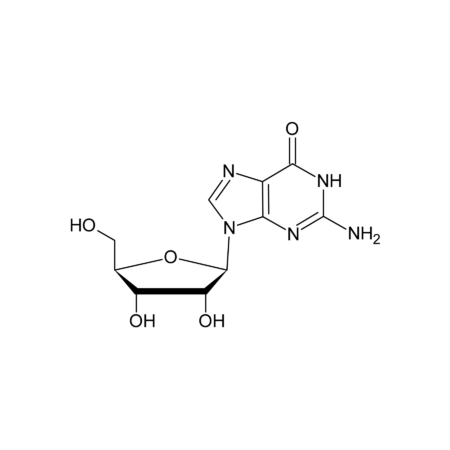
        Purity: ≥98% (HPLC)CAS-Number: 118-00-3SKU: G0035

        Read more Show Details
      • Desacetylcolchicine d-tartrate

        Desacetylcolchicine d-tartrate

        Purity: ≥97% (NMR)CAS-Number: 49720-72-1SKU: D0270

        Read more Show Details
      • Nordihydrocapsiate

        Nordihydrocapsiate

        Purity: ≥95% (HPLC)CAS-Number: 220012-53-3SKU: N0121

        Read more Show Details
      • 8-Methoxypsoralen

        8-Methoxypsoralen

        Purity: ≥95% (HPLC)CAS-Number: 298-81-7SKU: M0156

        Read more Show Details
      © Copyright - Chemodex AG - Customized Molecules developed in Switzerland
      • Home
      • All products
      • Order and delivery information
      • Disclaimer
      • Privacy policy
      • About this site
      StigmasterolStigmasterolShogaolShogaol Scroll to top