• Home
Results for {phrase} ({results_count} of {results_count_total})
Displaying {results_count} results of {results_count_total}

More results...

Filter by Product categories
Bioactive Molecules
Amino Acids, Peptides, Proteins
Carbohydrates
Lipids, Fatty Acids
Metabolites
Phytochemicals
Vitamins
Bioactive Small Molecules
Biopolymers
Detection in Bioanalysis
Fluorescent Detection
Organic Pollutants & Pesticides
Fungicides
Herbicides
Insecticides
Other Pollutants
Pharmaceutically Actives
Antibiotics
API's & Intermediates
Steroids
Reagents and Building Blocks
Reagents for Life Sciences
Buffers
Building Blocks, Intermediates, Reagents
Fluorescent Detection
Linker
Non Fluorescent Detection & Chromogene Detection
Quorum Sensing
Uncategorized
Unkategorisiert
    Industriestrasse 15, CH-9015 St. Gallen, Tel: +41 71 244 48 25
    • 0Shopping Cart
    Chemodex
    • Home
    • Products
    • Catalogs
    • About Chemodex
    • Contact & Distributors
    • Menu Menu
    Neocuproine hemihydrate

    Available from stock

      Inquiry

      Please fill out the form for your inquiry:


      * required field

      Neocuproine hemihydrate

      SKU
      N0115

      Category: Fluorescent Detection

      Synonyms
      2,9-Dimethyl-1,10-phenanthroline, DMPHEN, NSC 4280, VUF 7738
      484-11-7
      CAS-Number
      C14H12N2 · 0.5H2O
      Molecular Formula
      217.27
      Molecular Weight

      For Research Use Only. Not Intended for Diagnostic or Therapeutic Use.

      • Product Data
      • Handling
      • Safety Information
      • Details

      Specifications

      Purity
      ≥99% (Assay)
      Appearance
      White to light yellow powder
      Identity
      1H-NMR
      Water content (K.F.)
      ≤5%

      Properties

      Solvents
      Soluble in methanol (50 mg/ml), ethanol (10 mg/ml) or DMSO (25 mg/ml).
      Melting Point
      159 - 164 °C

      Documentation

      Safety Data Sheet (SDS)
      CDX N0115 SDS.pdf
      Shipping
      AMBIENT
      Short Term Storage
      RT
      Long Term Storage
      RT
      Handling Advice
      Protect from light and moisture.
      Use / Stability
      Stable for at least 2 years after receipt when stored at RT.
      Hazard statements
      H302 - H315 - H318 - H335
      Precautionary statements
      P280 - P301 + P312 + P330 - P302 + P352 - P305 + P351 + P338 + P310
      GHS Symbol
      GHS05+GHS07
      Signal word
      Danger
      Transportation
      Not dangerous goods
      Description
      Neocuproine is a complexing reagents, known for its ability to form stable complexes with metal ions, particularly CU2+ ions. This property makes it valuable in various analytical and research applications, including spectrophotometry and electrochemistry. In the presence of CU2+ ions, neocuproine forms a brightly colored complex that can be used for the quantitative determination of copper in solution. The Neocuproine-CU2+ complex exists in a 2:1 ratio with a maximum absorption at 454 nm. Neocuproine is used in complex with Cu2+ as chromogenic oxidant in the total antioxidant capacity assay (CUPRAC method). In addition to its analytical uses, neocuproine and its derivatives have been employed in the field of coordination chemistry to study and synthesize metal complexes. These complexes often have unique properties and are of interest for their potential applications in catalysis, material science, and other areas of chemical research. This compound is also widely used in some biomedical fields, such as in the study of copper metabolism disorders and neurodegenerative diseases and neocuproine-CU2+ complexes have shown biological properties, such as antitumor activity.
      Smiles
      Cc1ccc2ccc3ccc(C)nc3c2n1
      References
      (1) A. Mohindru, et al., Biochem. Pharmacol. 32, 3627 (1983) , (2) H.H. Al-Sa′doni, et al., Br. J. Pharmacol. 121, 1047 (1997) , (3) J.G. De Man, et al., Eur. J. Pharmacol. 381, 151 (1999) , (4) R. Apak, et al., Free Radic. Res. 39, 949 (2005) , (5) A.A. Gouda & A.S. Amin, Arabian J. Chem. 3, 159 (2010) , (6) O.V. Patel, et al., Biometals 26, 415 (2013) , (7) K.A. Jesse, et al., Inorg. Chem. 58, 9057 (2019)

      Neocuproine is a complexing reagents, known for its ability to form stable complexes with metal ions, particularly CU2+ ions. This property makes it valuable in various analytical and research applications, including spectrophotometry and electrochemistry. In the presence of CU2+ ions, neocuproine forms a brightly colored complex that can be used for the quantitative determination of copper in solution. The Neocuproine-CU2+ complex exists in a 2:1 ratio with a maximum absorption at 454 nm. Neocuproine is used in complex with Cu2+ as chromogenic oxidant in the total antioxidant capacity assay (CUPRAC method). In addition to its analytical uses, neocuproine and its derivatives have been employed in the field of coordination chemistry to study and synthesize metal complexes. These complexes often have unique properties and are of interest for their potential applications in catalysis, material science, and other areas of chemical research. This compound is also widely used in some biomedical fields, such as in the study of copper metabolism disorders and neurodegenerative diseases and neocuproine-CU2+ complexes have shown biological properties, such as antitumor activity.

      SKU: N0115 Category: Fluorescent Detection
      • Additional information

      Additional information

      Synonyms

      2,9-Dimethyl-1,10-phenanthroline, DMPHEN, NSC 4280, VUF 7738

      Purity

      ≥99% (Assay)

      Appearance

      White to light yellow powder

      CAS-Number

      484-11-7

      Molecular Formula

      C14H12N2 · 0.5H2O

      Molecular Weight

      217.27

      Identity

      1H-NMR

      Solvents

      Soluble in methanol (50 mg/ml), ethanol (10 mg/ml) or DMSO (25 mg/ml).

      Melting Point

      159 – 164 °C

      Smiles

      Cc1ccc2ccc3ccc(C)nc3c2n1

      Shipping

      AMBIENT

      Short Term Storage

      RT

      Long Term Storage

      RT

      Handling Advice

      Protect from light and moisture.

      Use / Stability

      Stable for at least 2 years after receipt when stored at RT.

      Hazard statements

      H302 – H315 – H318 – H335

      Precautionary statements

      P280 – P301 + P312 + P330 – P302 + P352 – P305 + P351 + P338 + P310

      GHS Symbol

      GHS05+GHS07

      Signal word

      Danger

      Transportation

      Not dangerous goods

      References

      (1) A. Mohindru, et al., Biochem. Pharmacol. 32, 3627 (1983), (2) H.H. Al-Sa′doni, et al., Br. J. Pharmacol. 121, 1047 (1997), (3) J.G. De Man, et al., Eur. J. Pharmacol. 381, 151 (1999), (4) R. Apak, et al., Free Radic. Res. 39, 949 (2005), (5) A.A. Gouda & A.S. Amin, Arabian J. Chem. 3, 159 (2010), (6) O.V. Patel, et al., Biometals 26, 415 (2013), (7) K.A. Jesse, et al., Inorg. Chem. 58, 9057 (2019)

      Quantity

      25 g, 100 g, Bulk

      cdx-Water content (K.F.)

      ≤5%

      Related products

      • 7-Hydroxy-4-coumarinylacetic acid

        7-Hydroxy-4-coumarinylacetic acid

        Purity: ≥98% (NMR)CAS-Number: 6950-82-9SKU: H0008

        Read more Show Details
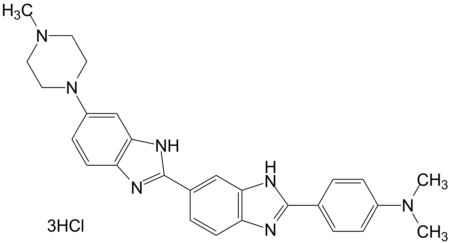
      • Hoechst 34580 solution

        Hoechst 34580 solution, 1 mg/ml in water

        Purity: ≥98% (HPLC)CAS-Number: 911004-45-0SKU: B0448

        Read more Show Details
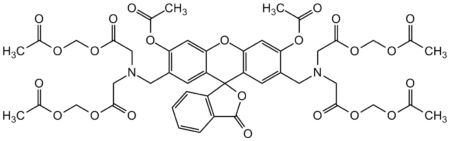
      • BAPTA-AM

        BAPTA-AM

        Purity: ≥95% (HPLC)CAS-Number: 126150-97-8SKU: B0285

        Read more Show Details
      • Hoechst 33342 solution

        Hoechst 33342 solution, 1 mg/ml in water

        Purity: ≥98% (HPLC)CAS-Number: 23491-52-3SKU: B0447

        Read more Show Details
      © Copyright - Chemodex AG - Customized Molecules developed in Switzerland
      • Home
      • All products
      • Order and delivery information
      • Disclaimer
      • Privacy policy
      • About this site
      Nigericin sodium saltNigericin sodium saltNonafluoro-tert-butyl alcoholNonafluoro-tert-butyl alcohol Scroll to top