• Home
Results for {phrase} ({results_count} of {results_count_total})
Displaying {results_count} results of {results_count_total}

More results...

Filter by Product categories
Bioactive Molecules
Amino Acids, Peptides, Proteins
Carbohydrates
Lipids, Fatty Acids
Metabolites
Phytochemicals
Vitamins
Bioactive Small Molecules
Biopolymers
Detection in Bioanalysis
Fluorescent Detection
Organic Pollutants & Pesticides
Fungicides
Herbicides
Insecticides
Other Pollutants
Pharmaceutically Actives
Antibiotics
API's & Intermediates
Steroids
Reagents and Building Blocks
Reagents for Life Sciences
Buffers
Building Blocks, Intermediates, Reagents
Fluorescent Detection
Linker
Non Fluorescent Detection & Chromogene Detection
Quorum Sensing
Uncategorized
Unkategorisiert
    Industriestrasse 15, CH-9015 St. Gallen, Tel: +41 71 244 48 25
    • 0Shopping Cart
    Chemodex
    • Home
    • Products
    • Catalogs
    • About Chemodex
    • Contact & Distributors
    • Menu Menu
    N

    Available from stock

      Inquiry

      Please fill out the form for your inquiry:


      * required field

      N,N-Diethyl-p-phenylenediamine sulfate

      SKU
      D0932

      Category: Building Blocks, Intermediates, Reagents

      Synonyms
      DPD sulfate, 4-Amino-N,N-diethylaniline sulfate salt, N,N-Diethyl-1,4-phenylenediammonium sulfate, Color Developing Agent 1
      6283-63-2
      CAS-Number
      C10H18N2O4S
      Molecular Formula
      262.33
      Molecular Weight

      For Research Use Only. Not Intended for Diagnostic or Therapeutic Use.

      • Product Data
      • Handling
      • Safety Information
      • Details

      Specifications

      Purity
      ≥99%
      Appearance
      White crystalline powder
      Identity
      1H-NMR

      Properties

      Solvents
      Soluble in water (100 mg/ml).
      Melting Point
      184 - 186 °C (lit.)
      Boiling Point
      274 - 275 °C
      Refractive Index
      n20D ~1.58 (Predicted)

      Documentation

      Safety Data Sheet (SDS)
      CDX D0932 MSDS.pdf
      Shipping
      AMBIENT
      Short Term Storage
      RT
      Long Term Storage
      RT
      Handling Advice
      Protect from light and moisture.
      Use / Stability
      Stable for at least 2 years after receipt when stored at RT.
      Hazard statements
      H302
      Precautionary statements
      P264, P270, P301 + P312, P501
      GHS Symbol
      GHS07
      Signal word
      Warning
      Transportation
      Not dangerous goods
      Description
      N,N-Diethyl-p-phenylenediamine sulfate (DPD) is used as a chromogenic indicator or reagent in analytical chemistry and in water quality testing. It is commonly used in a test called the DPD method, primarily for the measurement of free and total chlorine by titrimetric, colorimetric and spectroscopic methods in water. DPD reacts with free chlorine (hypochlorous acid and hypochlorite ions) to form a pink or magenta-colored compound. The intensity of the color is directly proportional to the concentration of chlorine, making it a convenient method for chlorine quantification. In general, it is used for spectrophotometric determination KIO4 levels, drugs (containing phenolic groups or aromatic amino groups) and as a peroxidase substrate. DPD has been developed as a color developing agent in photgraphy.
      Smiles
      CCN(CC)C1=CC=C(C=C1)N.OS(=O)(=O)O
      InChi Key
      AYLDJQABCMPYEN-UHFFFAOYSA-N
      References
      (1) G. Gordon, et al., Talanta 38, 145 (1991) , (2) L. Moberg & B. Karlberg, Anal. Chim. Acta 407, 127 (2000) , (3) F.H. Metwally, et al., Farmaco 56, 601 (2001) , (4) M. Hasani, et al., J. Hazard. Mat. 157, 161 (2008) , (5) P. Nagaraja, et al., Acta Pharm. 60, 217 (2010) , (6) F. Yang, et al., Mikrochim. Acta 186, 417 (2019) , (7) M. Zhou, et al., Anal. Chem. 93, 769 (2021)

      N,N-Diethyl-p-phenylenediamine sulfate (DPD) is used as a chromogenic indicator or reagent in analytical chemistry and in water quality testing. It is commonly used in a test called the DPD method, primarily for the measurement of free and total chlorine by titrimetric, colorimetric and spectroscopic methods in water. DPD reacts with free chlorine (hypochlorous acid and hypochlorite ions) to form a pink or magenta-colored compound. The intensity of the color is directly proportional to the concentration of chlorine, making it a convenient method for chlorine quantification. In general, it is used for spectrophotometric determination KIO4 levels, drugs (containing phenolic groups or aromatic amino groups) and as a peroxidase substrate. DPD has been developed as a color developing agent in photgraphy.

      SKU: D0932 Category: Building Blocks, Intermediates, Reagents
      • Additional information

      Additional information

      Synonyms

      DPD sulfate, 4-Amino-N,N-diethylaniline sulfate salt, N,N-Diethyl-1,4-phenylenediammonium sulfate, Color Developing Agent 1

      Purity

      ≥99%

      Appearance

      White crystalline powder

      CAS-Number

      6283-63-2

      Molecular Formula

      C10H18N2O4S

      Molecular Weight

      262.33

      Identity

      1H-NMR

      Solvents

      Soluble in water (100 mg/ml).

      Melting Point

      184 – 186 °C (lit.)

      Boiling Point

      274 – 275 °C

      Refractive Index

      n20D ~1.58 (Predicted)

      Smiles

      CCN(CC)C1=CC=C(C=C1)N.OS(=O)(=O)O

      InChi Key

      AYLDJQABCMPYEN-UHFFFAOYSA-N

      Shipping

      AMBIENT

      Short Term Storage

      RT

      Long Term Storage

      RT

      Handling Advice

      Protect from light and moisture.

      Use / Stability

      Stable for at least 2 years after receipt when stored at RT.

      Hazard statements

      H302

      Precautionary statements

      P264, P270, P301 + P312, P501

      GHS Symbol

      GHS07

      Signal word

      Warning

      Transportation

      Not dangerous goods

      References

      (1) G. Gordon, et al., Talanta 38, 145 (1991), (2) L. Moberg & B. Karlberg, Anal. Chim. Acta 407, 127 (2000), (3) F.H. Metwally, et al., Farmaco 56, 601 (2001), (4) M. Hasani, et al., J. Hazard. Mat. 157, 161 (2008), (5) P. Nagaraja, et al., Acta Pharm. 60, 217 (2010), (6) F. Yang, et al., Mikrochim. Acta 186, 417 (2019), (7) M. Zhou, et al., Anal. Chem. 93, 769 (2021)

      Quantity

      50 g, 250 g, Bulk

      Related products

      • Diphenyliodonium nitrate

        Diphenyliodonium nitrate

        Purity: ≥97% (Elemental Analysis)CAS-Number: 722-56-5SKU: D0046

        Read more Show Details
      • 2

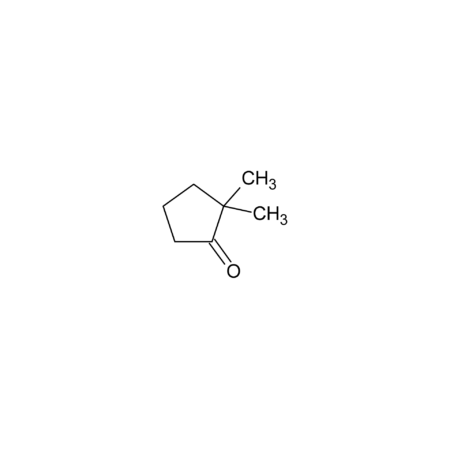
        2,2-Dimethylcyclopentanone

        Purity: ≥96% (NMR)CAS-Number: 4541-32-6SKU: D0333

        Read more Show Details
      • 1

        1,7-Dimethyluric acid

        Purity: ≥98% (HPLC)CAS-Number: 33868-03-0SKU: D0295

        Read more Show Details
      • Cyanuric fluoride

        Cyanuric fluoride

        Purity: ≥98% (NMR)CAS-Number: 675-14-9SKU: C0501

        Read more Show Details
      © Copyright - Chemodex AG - Customized Molecules developed in Switzerland
      • Home
      • All products
      • Order and delivery information
      • Disclaimer
      • Privacy policy
      • About this site
      2,3-Dihydroxynaphthalene27-(Diethylamino)-4-(hydroxymethyl)coumarin7-(Diethylamino)-4-(hydroxymethyl)coumarin Scroll to top