• Home
Results for {phrase} ({results_count} of {results_count_total})
Displaying {results_count} results of {results_count_total}

More results...

Filter by Product categories
Bioactive Molecules
Amino Acids, Peptides, Proteins
Carbohydrates
Lipids, Fatty Acids
Metabolites
Phytochemicals
Vitamins
Bioactive Small Molecules
Biopolymers
Detection in Bioanalysis
Fluorescent Detection
Organic Pollutants & Pesticides
Fungicides
Herbicides
Insecticides
Other Pollutants
Pharmaceutically Actives
Antibiotics
API's & Intermediates
Steroids
Reagents and Building Blocks
Reagents for Life Sciences
Buffers
Building Blocks, Intermediates, Reagents
Fluorescent Detection
Linker
Non Fluorescent Detection & Chromogene Detection
Quorum Sensing
Uncategorized
Unkategorisiert
    Industriestrasse 15, CH-9015 St. Gallen, Tel: +41 71 244 48 25
    • 0Shopping Cart
    Chemodex
    • Home
    • Products
    • Catalogs
    • About Chemodex
    • Contact & Distributors
    • Menu Menu
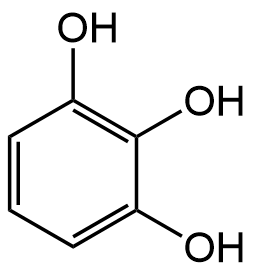
    Pyrogallol

    Available from stock

      Inquiry

      Please fill out the form for your inquiry:


      * required field

      Pyrogallol

      SKU
      Y0964

      Category: Building Blocks, Intermediates, Reagents

      Synonyms
      2-Hydroxyresorcinol, 1,2,3-Trihydroxybenzene, 2,3-Dihydroxyphenol, Pyrogallic acid
      87-66-1
      CAS-Number
      C6H6O3
      Molecular Formula
      126.11
      Molecular Weight

      For Research Use Only. Not Intended for Diagnostic or Therapeutic Use.

      • Product Data
      • Handling
      • Safety Information
      • Details

      Specifications

      Purity
      ≥99% (GC)
      Appearance
      White to off-white powder
      Identity
      1H-NMR

      Properties

      Solvents
      ethanol (20 mg/ml), water (20 mg/ml), DMSO (50 mg/ml).
      Melting Point
      131 - 135 °C
      Boiling Point
      309 °C (lit.)
      Shipping
      AMBIENT
      Short Term Storage
      RT
      Long Term Storage
      RT
      Handling Advice
      Protect from light and moisture.
      Use / Stability
      Stable for at least 2 years after receipt when stored at RT.
      Hazard statements
      H302 + H312 + H332 - H341 - H412
      Precautionary statements
      P273 - P280 - P301 + P312 - P302 + P352 + P312 - P304 + P340 + P312 - P308 + P313
      GHS Symbol
      GHS07+GHS08
      Signal word
      Warning
      Transportation
      Not dangerous goods
      Description
      The Polyphenol pyrogallol is a powerful naturally occuring reducing agent. Due to its oxygen radical generating property, pyrogallol is commonly used as a photographic developing agent, in hair dying industry, as an antiseptic and to calculate the amount of oxygen in the air. Pyrogallol is a potent superoxide anion (O2•-) generator. Pyrogallol causes oxidative damage and induces mutagenesis, carcinogenesis and hepatotoxicity. It impairs immune responses, inhibits phagocytosis and suppresses the proliferation due to its strong free radical generating potential. As a superoxide generator it is commonly used to investigate the role of free radicals in the biological system. It is a potent inducer of Nrf2-mediated gene expression. Pyrogallol possesses anti-bacterial, anti-fungal, anti-psoriatic anti-cancer, anti-inflammatory and neuroprotective properties. Pyrogallol induces apoptosis in lung cancer cells via the overproduction of O2•- and affects mitogen activated protein kinases (MAPKs). Pyrogallol exerts antitumor effects via S-phase arrest and inhibition of PI3K/AKT/Skp2/cMyc signaling. Pyrogallol is a neuroprotective compound shown to work as dual modulators for the treatment of AD by inhibiting aggregation or promoting dissociation of Aβ and tau. Pyrogallol is an anti-biofilm agent. It reduces biofilm formation in S. aureus and S. epidermidis in a mechanism involving induction of bacterial oxidative stress. Pyrogallol can be used as an organic building block or intermediate for synthesis of different types of sensors (for colorimettic detection) or other biological active compounds (e.g. antivirals). It is also used as a metal-complexing agent.
      Smiles
      OC1=C(O)C=CC=C1O
      InChi Key
      WQGWDDDVZFFDIG-UHFFFAOYSA-N
      References
      (1) E. Nicolis, et al., Int. Immunopharmacol. 8, 1672 (2008) , (2) N. Ni, et al., Bioorg. Med. Chem. Lett. 18, 1567 (2008) , (3) Y.H. Han, et al., Toxicol. In Vitro 22, 1605 (2008) , (4) Y.H. Han, et al., Chem. Biol. Interact. 177, 107 (2009) , (5) G. Upadhyay, et al., Chem. Biol. Interact. 183, 333 (2010) (Review) , (6) M.S. Baliga & J.J. Dsouza, Eur. J. Cancer Prev. 20, 225 (2011) (Review) , (7) W.H. Park, Int. J. Oncol. 49, 785 (2016) , (8) M. Abderrahim, et al., Talant 166, 349 (2017) , (9) K. Inoue, et al., Luminescence 33, 277 (2018) , (10) H. Ahn, et al., Int. J. Mol. Sci. 20, 3985 (2019) , (11) A. Anantram & M. Degani, Fut. Med. Chem. 11, 2287 (2019) (Review) , (12) H. Su, et al., Nat. Commun. 12, 3623 (2021) , (13) V. Dangi, et al., Methods 220, 79 (2023) , (14) S. Kim, et al., Biomed. Pharmacother. 168, 115770 (2023) , (15) K.H.C. Roese, et al., J. Appl. Microbiol. (Epub ahead of print) (2023)
      InChi
      InChI=1S/C6H6O3/c7-4-2-1-3-5(8)6(4)9/h1-3,7-9H

      The Polyphenol pyrogallol is a powerful naturally occuring reducing agent. Due to its oxygen radical generating property, pyrogallol is commonly used as a photographic developing agent, in hair dying industry, as an antiseptic and to calculate the amount of oxygen in the air. Pyrogallol is a potent superoxide anion (O2•-) generator. Pyrogallol causes oxidative damage and induces mutagenesis, carcinogenesis and hepatotoxicity. It impairs immune responses, inhibits phagocytosis and suppresses the proliferation due to its strong free radical generating potential. As a superoxide generator it is commonly used to investigate the role of free radicals in the biological system. It is a potent inducer of Nrf2-mediated gene expression. Pyrogallol possesses anti-bacterial, anti-fungal, anti-psoriatic anti-cancer, anti-inflammatory and neuroprotective properties. Pyrogallol induces apoptosis in lung cancer cells via the overproduction of O2•- and affects mitogen activated protein kinases (MAPKs). Pyrogallol exerts antitumor effects via S-phase arrest and inhibition of PI3K/AKT/Skp2/cMyc signaling. Pyrogallol is a neuroprotective compound shown to work as dual modulators for the treatment of AD by inhibiting aggregation or promoting dissociation of Aβ and tau. Pyrogallol is an anti-biofilm agent. It reduces biofilm formation in S. aureus and S. epidermidis in a mechanism involving induction of bacterial oxidative stress. Pyrogallol can be used as an organic building block or intermediate for synthesis of different types of sensors (for colorimettic detection) or other biological active compounds (e.g. antivirals). It is also used as a metal-complexing agent.

      SKU: Y0964 Category: Building Blocks, Intermediates, Reagents
      • Additional information

      Additional information

      Synonyms

      2-Hydroxyresorcinol, 1,2,3-Trihydroxybenzene, 2,3-Dihydroxyphenol, Pyrogallic acid

      Purity

      ≥99% (GC)

      Appearance

      White to off-white powder

      CAS-Number

      87-66-1

      Molecular Formula

      C6H6O3

      Molecular Weight

      126.11

      Identity

      1H-NMR

      Solvents

      ethanol (20 mg/ml), water (20 mg/ml), DMSO (50 mg/ml).

      Melting Point

      131 – 135 °C

      Boiling Point

      309 °C (lit.)

      Smiles

      OC1=C(O)C=CC=C1O

      InChi Key

      WQGWDDDVZFFDIG-UHFFFAOYSA-N

      Shipping

      AMBIENT

      Short Term Storage

      RT

      Long Term Storage

      RT

      Handling Advice

      Protect from light and moisture.

      Use / Stability

      Stable for at least 2 years after receipt when stored at RT.

      Hazard statements

      H302 + H312 + H332 – H341 – H412

      Precautionary statements

      P273 – P280 – P301 + P312 – P302 + P352 + P312 – P304 + P340 + P312 – P308 + P313

      GHS Symbol

      GHS07+GHS08

      Signal word

      Warning

      Transportation

      Not dangerous goods

      References

      (1) E. Nicolis, et al., Int. Immunopharmacol. 8, 1672 (2008), (2) N. Ni, et al., Bioorg. Med. Chem. Lett. 18, 1567 (2008), (3) Y.H. Han, et al., Toxicol. In Vitro 22, 1605 (2008), (4) Y.H. Han, et al., Chem. Biol. Interact. 177, 107 (2009), (5) G. Upadhyay, et al., Chem. Biol. Interact. 183, 333 (2010) (Review), (6) M.S. Baliga & J.J. Dsouza, Eur. J. Cancer Prev. 20, 225 (2011) (Review), (7) W.H. Park, Int. J. Oncol. 49, 785 (2016), (8) M. Abderrahim, et al., Talant 166, 349 (2017), (9) K. Inoue, et al., Luminescence 33, 277 (2018), (10) H. Ahn, et al., Int. J. Mol. Sci. 20, 3985 (2019), (11) A. Anantram & M. Degani, Fut. Med. Chem. 11, 2287 (2019) (Review), (12) H. Su, et al., Nat. Commun. 12, 3623 (2021), (13) V. Dangi, et al., Methods 220, 79 (2023), (14) S. Kim, et al., Biomed. Pharmacother. 168, 115770 (2023), (15) K.H.C. Roese, et al., J. Appl. Microbiol. (Epub ahead of print) (2023)

      InChi

      InChI=1S/C6H6O3/c7-4-2-1-3-5(8)6(4)9/h1-3,7-9H

      Quantity

      100 g, 500 g, Bulk

      Related products

      • 2

        2,5-Dioxopyrrolidin-1-yl propanoate

        Purity: ≥95%CAS-Number: 30364-55-7SKU: D0489

        Read more Show Details
      • trans-1

        trans-1,3-Diphenyl-2-propen-1-ol

        Purity: ≥98% (HPLC)CAS-Number: 62668-02-4SKU: D0106

        Read more Show Details
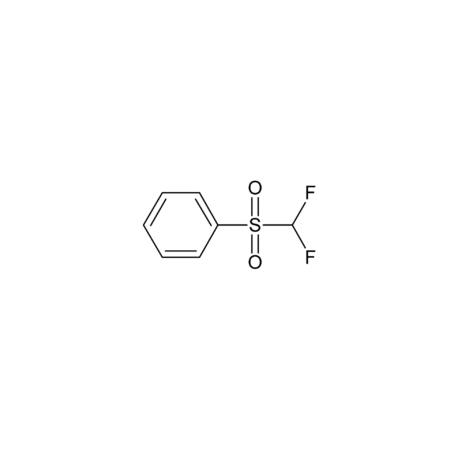
      • Difluoromethyl phenyl sulfone

        Difluoromethyl phenyl sulfone

        Purity: ≥98% (HPLC)CAS-Number: 1535-65-5SKU: D0401

        Read more Show Details
      • Diphenyliodonium nitrate

        Diphenyliodonium nitrate

        Purity: ≥97% (Elemental Analysis)CAS-Number: 722-56-5SKU: D0046

        Read more Show Details
      © Copyright - Chemodex AG - Customized Molecules developed in Switzerland
      • Home
      • All products
      • Order and delivery information
      • Disclaimer
      • Privacy policy
      • About this site
      Tetrahexylammonium hydrogensulfateTetrahexylammonium hydrogensulfate10-Acetylphenoxazine10-Acetylphenoxazine Scroll to top